Early Years
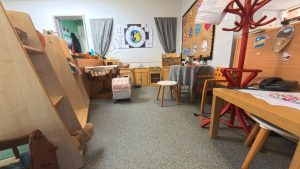
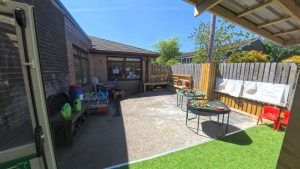
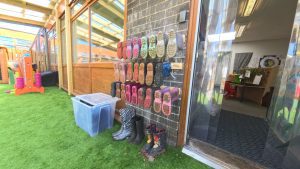
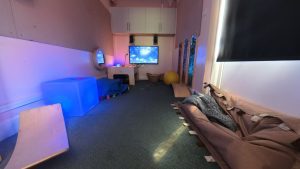
We aim to build responsible, resourceful, and resilient learners through a curiosity-driven approach that nurtures independence.
EYFS Intent & Ethos
Hollingwood Academy’s Early Years Foundation Stage (EYFS) offers a safe, nurturing and engaging environment for Nursery and Reception children, designed to overcome barriers to learning and support all pupils, including disadvantaged and those with SEND, to reach their full potential. Our staff have high expectations of all pupils and work hard to meet the needs of all children in their care.
We aim to instil a lifelong love for learning through a creative and bespoke ethos encouraging the children to be curious about the world around them.
We address children’s low entry points into the EYFS by providing them with a curriculum from Nursery to Reception that is exciting, engaging, highly relevant and enables pupils in EYs to build knowledge, skills, attitudes and values that ensure their progression.
The Early Years is carefully designed to offer a rich, stimulating environment through which we will develop strong positive attitudes to learning, supplemented with real-life, memorable experiences shared with our friends.
The school emphasises strong relationships with parents, carers and the community, encouraging active engagement in children’s education, building trust and recognising the importance of working together in supporting a child’s development through events, consultations and parental workshops.
We are committed to fostering resilient, resourceful and responsible individuals who will acquire strong foundations for future success.
Implementation – The Early Years Curriculum
The EYFS curriculum at Hollingwood Academy is a reading inspired curriculum with stories and skills at the heart. Each half term we immerse our children in high quality books and staff use highly effective questioning and prompts based on the Blank Levels to support and extend students’ independent learning. We develop language and oracy through a language rich provision and role play areas to develop communication and language. There are high expectations for all pupils.
Through careful planning, implementation, and ongoing refinement of this curriculum, pupils are provided with opportunities to develop, strengthen, and deepen their knowledge, understanding, and skills across all seven areas of learning within the EYFS. S
taff have a strong understanding of the seven areas of learning and recognise their importance, as well as the way they link together.
The 3 prime areas; Personal, Social and Emotional Development (PSED), Communication and Language (C&L) and Physical Development (PD) help children develop the confidence, communication, curiosity, and emotional security they need to engage and thrive with their learning.
The 4 specific areas of learning; Literacy, Mathematics, Understanding the World and Expressive Arts and Design, develop the foundations for learning core subjects, deeper knowledge, creativity, problem-solving skills, and a clearer understanding of the world they live in.
Our curriculum shows clear skills-based progression through the Early Years, ensuring the children are Year 1 ready, and provides meaningful cross-curricular links and extended periods of play, promoting sustained thinking linked to children’s interests and ideas. Through carefully planned teaching and purposeful provision design, we support each child to work towards the Early Learning Goals (ELGs) at the end of the EYFS. This is guided by the statutory EYFS Framework (2024) and informed by the non-statutory Birth to 5 Matters guidance.
Impact
As a result of our carefully planned curriculum, high-quality teaching, and purposeful provision, children make excellent progress across all areas of learning. They develop strong communication, social, emotional, and physical skills, alongside curiosity, creativity, and a love of learning.
By the end of the EYFS, children are confident, independent, and well-prepared to successfully transition into Key Stage 1, equipped with the knowledge, skills, and attitudes to thrive.
PRIME AREAS IN DETAIL
Communication and Language
Early communication and language development is fundamental at Hollingwood, particularly for disadvantaged pupils, those with SEND, those who are known (or previously known) to children’s social care, and those who may face other barriers to their learning and/or well-being. The development of children’s spoken language underpins all seven areas of learning and development which is why it is at the heart of all we do.
We develop language and oracy through a language rich provision and role play areas to develop communication and language.
Children are immersed in a language-rich environment using approaches such as Little Wandle, Drawing Club, and the WellComm toolkit, supported by reading, stories, rhymes, poems, and systematic questioning.
Staff adapt communication for non-verbal or pre-verbal pupils using visuals, model new vocabulary, and build confidence in speaking. Sustained shared thinking is used to develop children’s communication and language skills by engaging them in meaningful, focused interactions with adults and peers.
Through carefully guided conversations, questioning, and problem-solving, children are encouraged to express their ideas, listen, reflect, and extend their vocabulary. These rich, interactive experiences support children to articulate their thoughts confidently, strengthen understanding, and build the foundations for literacy and learning across all areas of the curriculum.
Personal, Social and Emotional Development
At Hollingwood, we prioritise children’s personal, social and emotional development (PSED) as it is essential for their mental health, well-being and cognitive growth.
The Story Project is used across the whole school, focusing on books that spark conversations and inspire children to discuss their thoughts and feelings.
From the start of Nursery, PSED is embedded through the curriculum and woven through the environment in different areas of provision. Dedicated circle time and consistent modelling of positive behaviours, such as turn-taking, listening, and self-regulation, support children in understanding their own feelings and those of others, preparing them effectively for the next stages of their learning.
Through adult modelling and guidance, they will learn how to look after their bodies, including healthy eating, and manage their personal needs independently. By engaging in supported play with other children, they develop the skills to build friendships, work together, and manage disagreements peacefully.
These characteristics create a firm foundation, supporting children’s achievements now and in the future. By the end of Reception, pupils are able to manage emotions, develop a positive sense of self, set themselves simple goals and have confidence in their own abilities.
Physical Development
Physical activity is vital in children’s all-round development, enabling them to pursue happy, healthy and active lives.
Physical development is a foundational area that enables children to engage with the world around them and lays the building blocks for later physical capabilities and health.
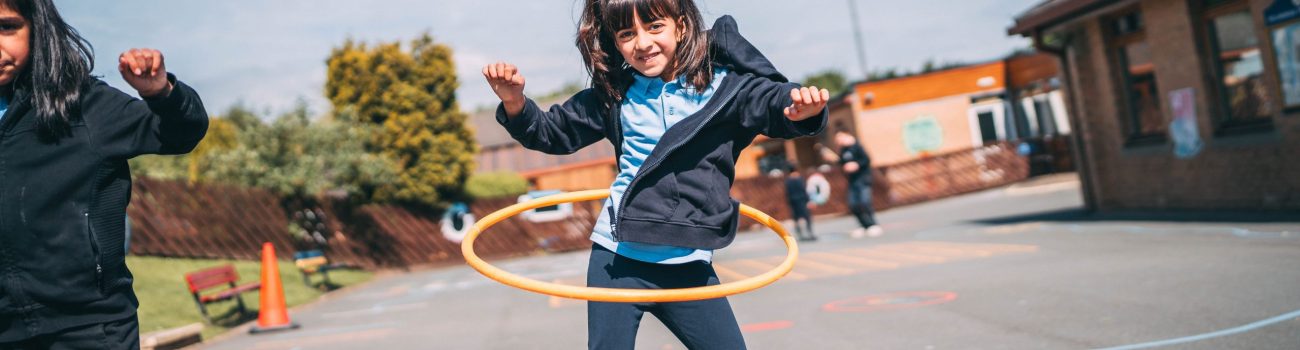
At Hollingwood, we promote health and well-being through our free-flow environment, allowing children the choice of indoor and outdoor provision throughout the day. The gross motor skill focus in the outdoor areas helps develop coordination, spatial awareness and stability through the exposure to obstacle courses, balance bikes and games.
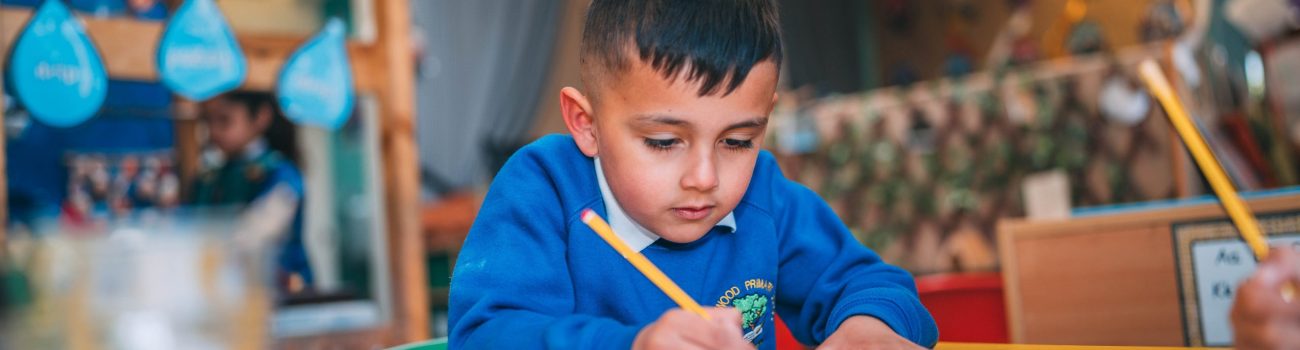
The indoor areas of provision focus on fine motor control that encompasses hand muscle strength, wrist movement, and pincer control: skills which facilitate independence in daily tasks such as eating, dressing, and mark-making.
The Imoves physical education scheme is planned into the weekly timetable from Reception to boost focus, wellbeing and academic performance.
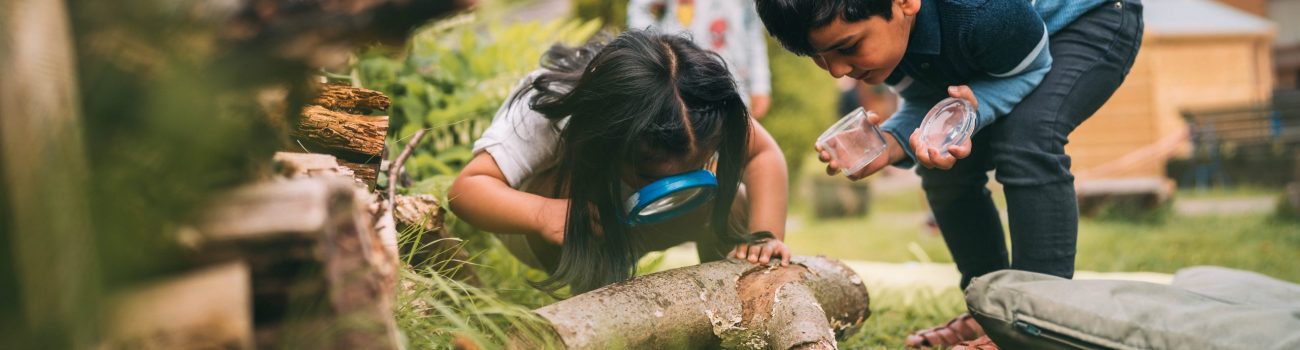
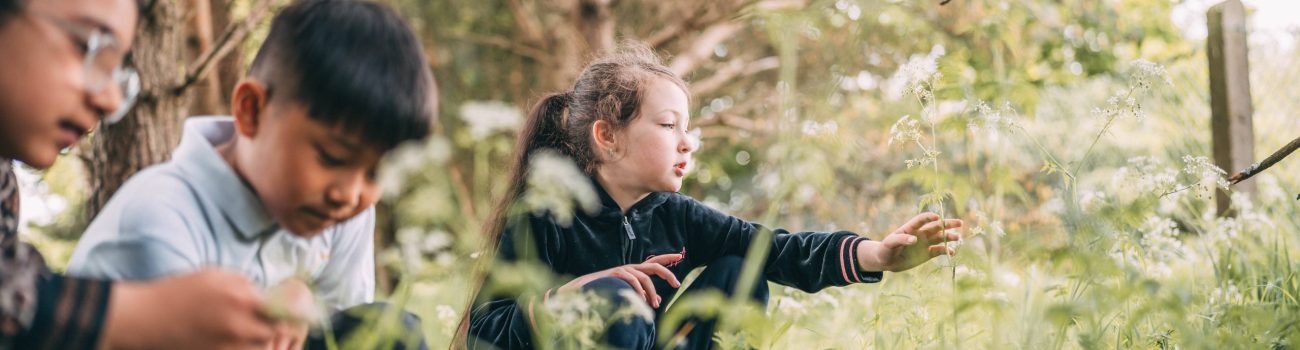
In addition, all early years children visit the forest school area weekly, which is a child-centred inspirational learning process that supports play, exploration and supported risk taking. It develops confidence and self-esteem through learner inspired, hands-on experiences in a natural setting.
By prioritising physical development, Hollingwood fosters holistic growth, helping children thrive physically, socially, and intellectually, while establishing lifelong healthy habits.
SPECIFIC AREAS IN DETAIL
Literacy
Reading
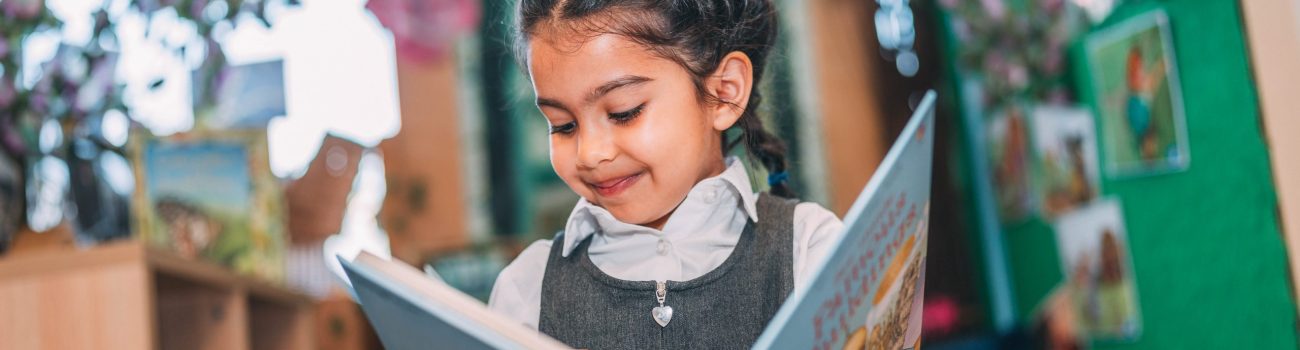
At Hollingwood Academy, reading is central to our curriculum, fostering language, and developing vocabulary skills. Reading skills are developed through planned group reading sessions in Reception, story project reading time, songs, rhymes, library sessions, and thematic activities in provision.
The school celebrates cultural diversity with books in all areas of the environment linked to a variety of festivals which helps children develop empathy, respect, and a positive sense of identity, while preparing them to thrive in a diverse society. Through fostering early reading confidence and proficiency, Hollingwood not only equips pupils with essential literacy skills but also fosters critical thinking, curiosity, and resilience.
This strong foundation enables children to achieve academic success, engage meaningfully with the wider curriculum, and develop a lifelong love of learning.
Writing
In the Early Years, writing is prioritised, integrating playful exploration with purposeful skill-building.
Fine motor skill activities are carefully planned through the use of Dough Disco, threading, and finger painting, which support pencil control and hand-eye coordination. They progress from mark-making with a variety of materials to emergent writing, experimenting with letters, words, and sentences, supported by approaches such as Drawing Club that also enhance language and vocabulary.
Writing is integrated into every day, meaningful activities, from role-play and creative tasks to labelling and list-making, fostering self-expression, communication, and cognitive development.
Phonics
Hollingwood follows the Little Wandle Phonics Scheme. Little Wandle teaches children letters and sounds in a structured, engaging way, helping them to read, write, and spell confidently.
In the Early Years, it develops language, communication, and early literacy skills, while building confidence and enjoyment in learning.
In Nursery, Little Wandle focuses on the foundations of phonics through listening, speaking, and sound play. Children develop their awareness of sounds, rhythm, rhyme, and initial letters while enjoying songs, stories, and games. These early skills build confidence, support language development, and prepare children to begin formal phonics in Reception.
In Reception, Little Wandle systematically teaches phonics, helping children confidently read and write. Through daily practice with sounds, blending, and decodable texts, children develop early literacy skills, language, and communication, preparing them to meet the Early Learning Goals and transition successfully to Key Stage 1.
Maths
In the Early Years, mathematical development is carefully planned to provide a clear progression of skills while building children’s confidence and enjoyment of learning. Activities are designed to develop number, shape, space, measure, and pattern knowledge through both play-based and adult-led experiences. This approach supports children in applying mathematical thinking across the curriculum and follows the White Rose Maths Curriculum.
In addition to this in Reception, the NCETM’s Mastering Number scheme is delivered to build fluency, number sense, and further problem-solving skills. Mathematical practices are practical starting with concrete resources like Numicon, rekenreks, five and tens frames, cubes, blocks, and scales before moving to pictorial and abstract representations. Engaging in open-ended tasks, children strengthen their reasoning, resilience, and ability to express mathematical concepts clearly.
By the end of the Early Years at Hollingwood, children have a solid understanding of number, shape, space, and measure, strong reasoning skills, and confidence in applying their knowledge, ensuring they are fully prepared to meet the Year 1 curriculum and Early Learning Goals in maths.
Understanding the World
In our Early Years setting, children explore and make sense of the world around them through engaging, hands-on experiences. They develop curiosity and knowledge through Forest School sessions, growing plants, observing seasonal changes, and learning about their local community.
Children learn about British values, traditions, and diverse perspectives, helping them understand and respect the society they are part of. Enrichment activities include a Reception trip to Nell Bank to explore We’re Going on a Bear Hunt and Nursery are visited by a local farm, bringing stories and the wider world to life. Children also develop environmental awareness, care for living things, and expand their understanding of the world beyond, including space, fostering connections, critical thinking, and a lifelong sense of wonder.
Expressive Arts and Design
At Hollingwood, children are encouraged to express themselves creatively through a rich variety of experiences. They explore art, music, dance, role-play, and craft activities, developing imagination, confidence, and self-expression.
Our offer includes parental workshops, such as themed craft sessions, enabling families to join in and share creative learning. Children also participate in whole-school performances, festivals, and concerts, experiencing the arts in its widest sense and celebrating their creativity with the wider community.
Children have the added option of joining a ‘Rock Steady’ Band where their inclusive approach helps children find a sense of belonging through new friendships and a shared love for music, whilst boosting social skills, wellbeing and confidence. These opportunities foster curiosity, collaboration, and a lifelong appreciation for the arts.

We have been part of the Oral Health Programme and received recognition for our commitment to children’s oral health.
NHS Better Smiles CERTIFICATES RP
NHS Better Smiles CERTIFICATES